
BlogsGuide
Toddler Beds Buying Guide: When to Move from a Cot and How to Choose the Right Bed
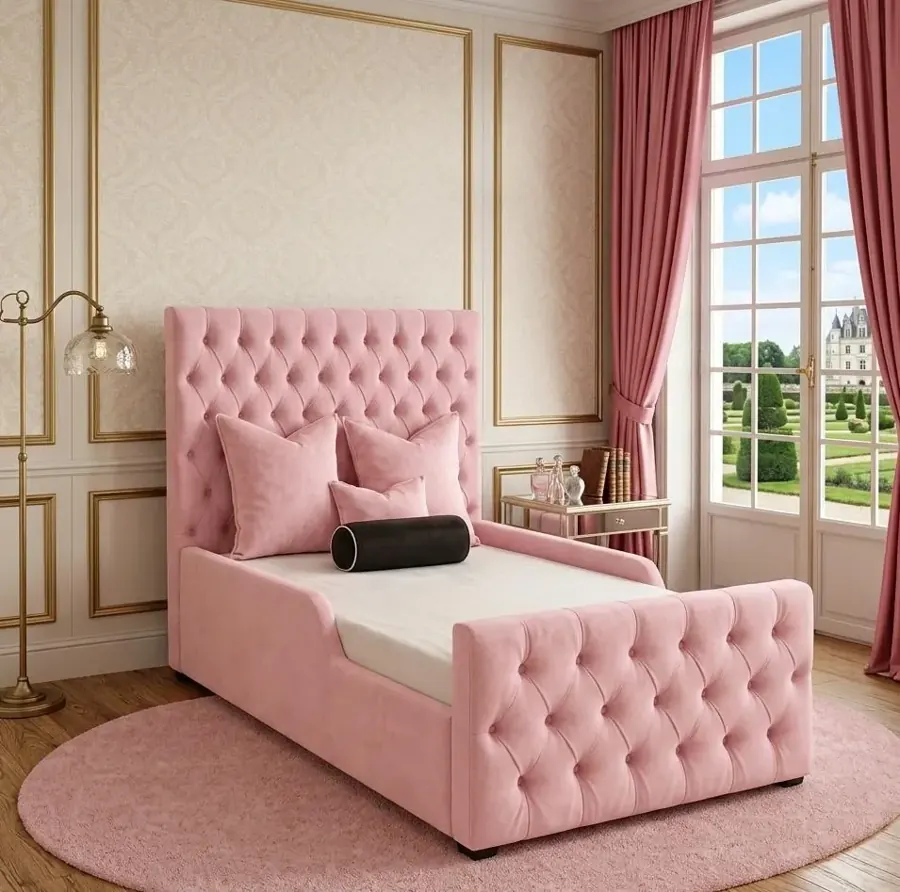
Most children move into a toddler bed somewhere between 18 months and 3 years old, and the clearest sign it is time is when they start climbing out of the cot. A good first bed sits low to the floor, has raised sides so they do not roll out at night, and comes with a mattress that fits the frame exactly — not the old cot mattress pushed into a bigger space.
This guide covers the decisions parents actually face: when to switch, which mattress size to check, how much side protection you need, which style will still suit the room in a couple of years, and how to set the bedroom up so the first few weeks go smoothly.
When is the right time to move from a cot?
There is no fixed birthday. Some children are happy in a cot until nearly three; others are scaling the bars before their second birthday. Climbing out is the main reason to move, because a fall from the top rail of a cot is much higher than a roll out of a low bed.
Other common triggers are a child who has simply outgrown the cot length, potty training (they need to get up in the night without calling for help), or a new baby on the way who will need the cot. If a sibling is coming, try to make the switch a couple of months before or after the birth so the older child does not feel pushed out of their bed.
If your child sleeps well and stays put, there is no rush. Moving too early can unsettle a good sleeper, so let their behaviour decide rather than the calendar.
Check the mattress size before anything else
This is where most mistakes happen. A standard UK cot mattress is about 120 cm by 60 cm, while many toddler mattresses are around 140 cm by 70 cm. If you drop a cot mattress into a toddler frame, you leave gaps around the edges where small arms and legs can get stuck, and the mattress can slide about.
The simplest fix is to buy a bed that arrives with its own mattress. Every model in our toddler range we checked is supplied with a mattress included, made to sit inside that frame, and the size options shown at checkout are Small Single and Single. Choose the size first, then read the listing so you know exactly what you are ordering.
- Use the mattress that is made for the frame, or one that matches the stated size exactly.
- Press down along every edge: there should be no gap between the mattress and the sides that a hand can slip into.
- Pick a firm, flat mattress for young children rather than a soft, sinking one.
- Take the protective wrapping off as soon as the bed arrives and let the mattress air out before the first night.
Side rails, height and safety features
Side guards are the feature that matters most in the first year. A grey bumper line toddler bed, for example, has integrated raised sides running along the frame, so a restless sleeper meets a padded edge rather than the floor. Raised sides with an open section in the middle are ideal: they stop rolling out but still let a child climb in and out on their own.
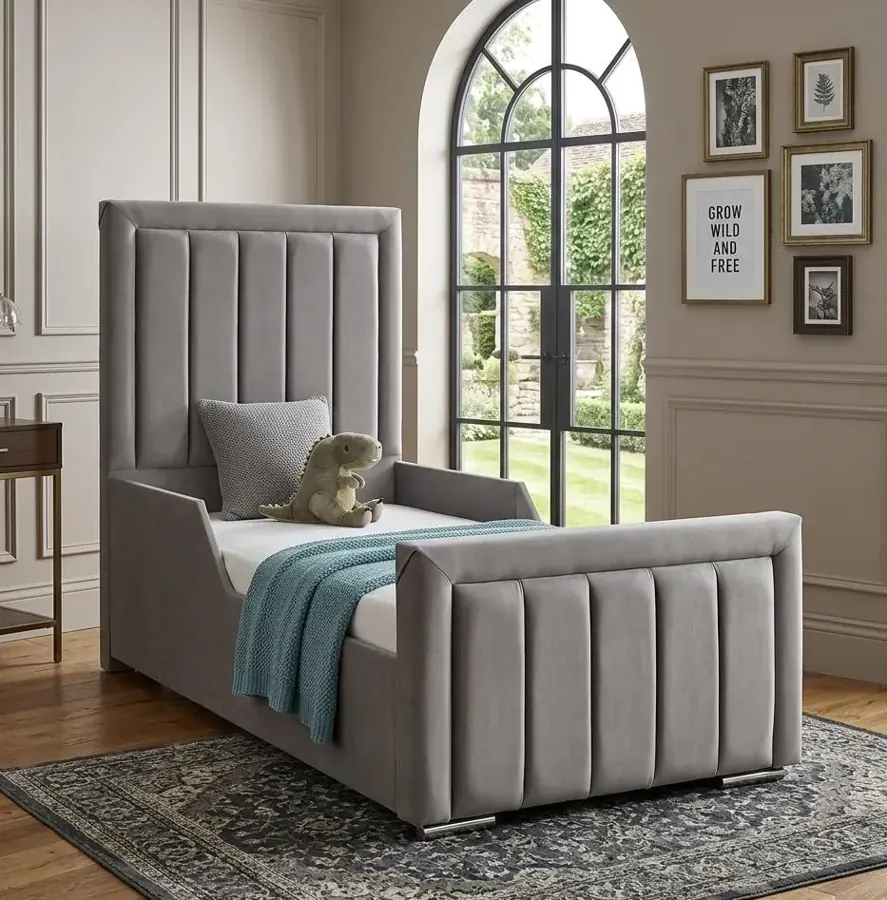
Height is the other half of the equation. A low frame means a toddler can sit on the edge and get down safely, and any bump in the night is a short one. Upholstered frames add another layer of comfort, because the headboard and sides are soft rather than hard wood or metal.
Whatever you choose, check the bed is fully assembled and every fixing is tight before the first night, and go over the fixings again after a few weeks of bouncing.
Choosing a style that will last
A toddler bed is used for a few years, so it is worth picking something the child likes now and you will still be happy to look at later. Upholstered velvet frames are popular because they feel soft, look smart in a nursery or a shared room, and come in calmer shades as well as brighter ones. Each model we looked at can be ordered in a wide palette, from grey, charcoal, cream and beige to pink, mustard, duck egg, teal and blue.
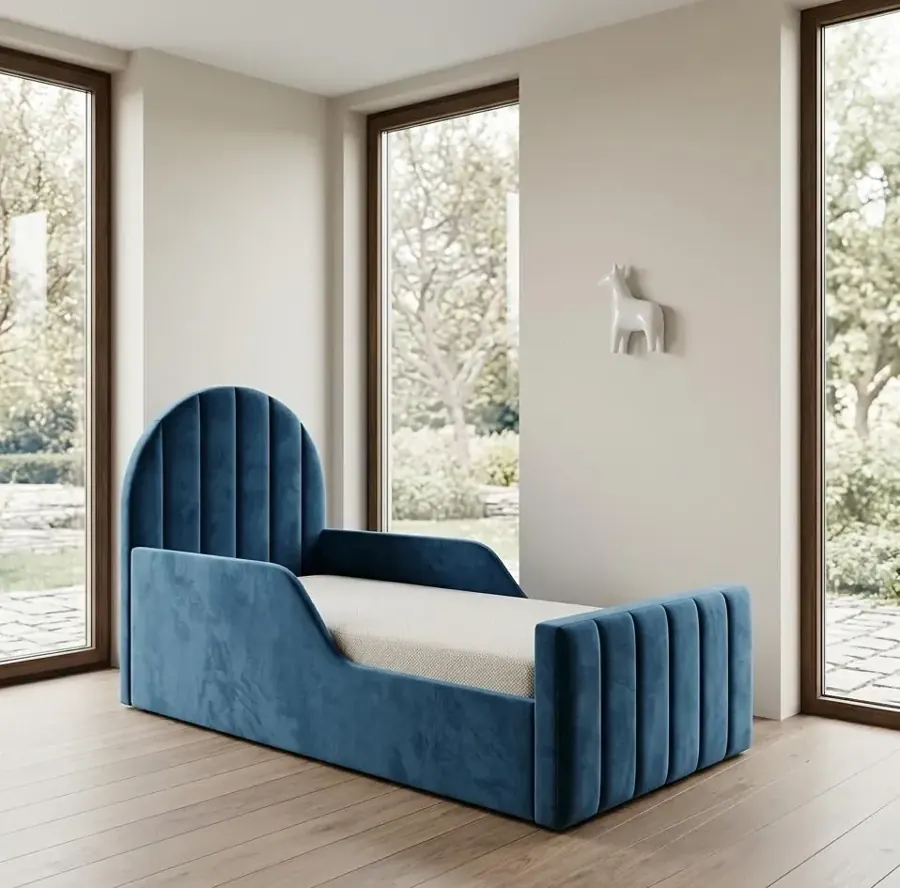
Headboard shape is where the personality comes in. The blue velvet arch panel toddler bed pairs a rounded arched headboard with vertical panels and curved side guards — a neat, slightly grown-up look. Chesterfield-style frames with deep buttoning, like the pink Hilton design in our main photo, feel more traditional. A sunburst headboard, such as the grey Twilight frame, makes a strong focal point in a plain room.
If the bedroom will be redecorated later, neutral fabrics give you more freedom; a single cushion, blanket or wall print can carry the colour instead.
Making bedtime exciting: themed and cloud-shaped beds
For a child who is nervous about leaving the cot, the bed itself can do a lot of the persuading. A sky blue cloud toddler bed has a soft, cloud-shaped velvet headboard on a low-profile frame, which many little ones see as their own special place rather than a step away from something familiar. The same cloud design is also available in cream for a softer scheme.
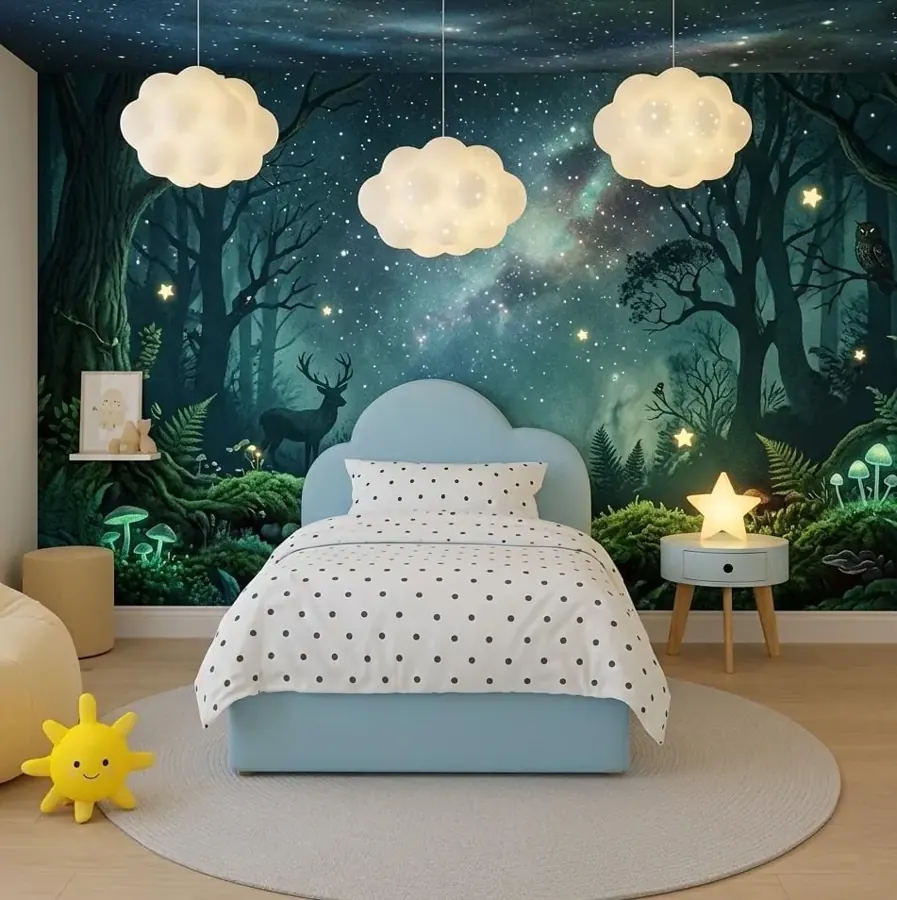
Let your child help choose the bedding, a cuddly toy that lives on the bed, or a night light for the bedside. Small choices like these give them a sense of ownership and tend to make the first week of bedtimes easier.
Setting up the room for a safe first big-child bed

Once a child can get out of bed by themselves, the whole bedroom becomes part of their sleeping space. Walk around the room at their eye level and look for anything they could pull, climb or open.
- Place the bed away from windows, blind cords and radiators.
- Fix tall furniture such as chests of drawers and bookcases to the wall so it cannot tip if climbed.
- Keep heavy or breakable items off low shelves and bedside tables.
- Fit a stair gate at the bedroom door or the top of the stairs if your child might wander at night.
- Measure the room with drawers and doors open, not just the empty floor, and leave a clear path from the bed to the door.
Keep the same bedtime routine you used with the cot — bath, story, lights down — so the only thing that changes is the bed. Consistency matters far more than the frame itself during the first few nights.
Delivery, assembly and what happens next
Before ordering, check the route from the front door to the bedroom, particularly on narrow terraced staircases, and plan to assemble the bed in the room it will live in. Delivery is free across the UK on eligible orders, and you can pay cash on delivery where offered, so there is no deposit to put down. If you have questions about sizing, fabric or access on the day, use the purchase chat on the product page before you order.
Children usually stay in a toddler bed until they are somewhere around four to six years old, or until they start to look cramped. When that time comes, our kids beds range is the natural next step, with full single frames that suit older children.
Conclusion
Choosing a toddler bed comes down to a handful of checks: move when your child is ready rather than on a set date, use a mattress made for the frame, prioritise raised sides and a low height, and pick a style that will still work in the room as they grow. Get the bedroom itself safe and keep the routine the same, and most children settle into their first big bed far faster than parents expect.
Browse the full toddler range to compare colours and headboard styles side by side, or start with the beds linked below. If you are planning other bedrooms at the same time, our king size bed buying guide and small space furniture ideas are useful companions to this one.
FAQs
Most children move between 18 months and 3 years old. The clearest sign is climbing out of the cot; outgrowing the cot, potty training or a new baby needing the cot are other common reasons.
Usually not. A standard cot mattress is about 120 cm by 60 cm, and many toddler mattresses are around 140 cm by 70 cm, so a cot mattress can leave dangerous gaps. Use the mattress made for the frame, or one that matches the listed size exactly.
For most children, yes, at least for the first year. Raised sides stop a restless sleeper rolling out, while an open section still lets them climb in and out by themselves.
Yes. The toddler beds we sell are supplied with a mattress included, made to fit the frame, and you choose Small Single or Single at checkout. Check each product page for the full details before ordering.
Typically until they are somewhere between four and six years old, or until they start to look cramped. After that, a full single kids bed is the usual next step.
UK Furniture Online offers 14-day returns with a collection charge. Measure the room carefully before ordering, and email info@ukfurnitureonline.co.uk if you need help with sizes or colours. Our warehouse address is 20 Fairhaven Street, Manchester M12 5EE.